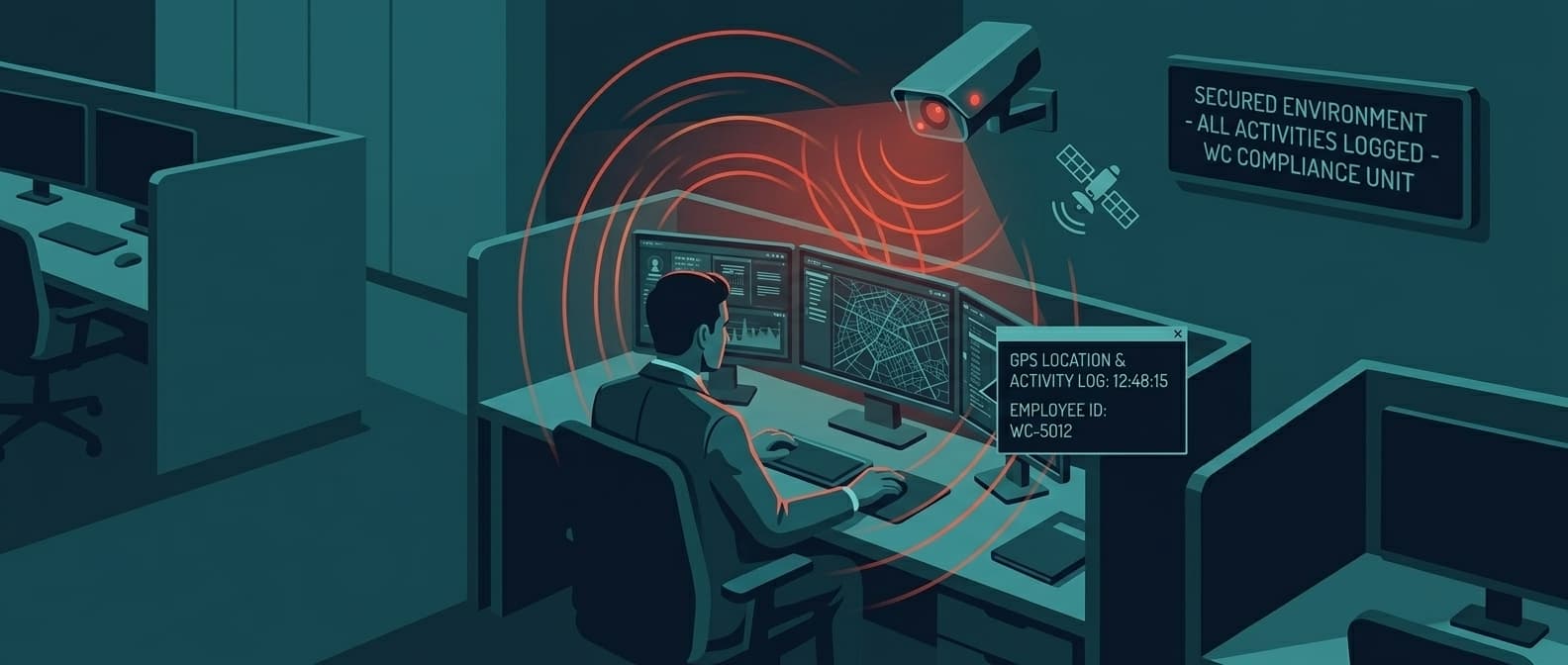
Workers Comp Surveillance: How GPS Evidence Wins (and Loses) Fraud Cases
Workers compensation fraud costs U.S. employers between $6 billion and $9 billion per year in direct losses, depending on which estimate you use. The Coalition Against Insurance Fraud puts total insurance fraud at $80 billion annually, with workers comp representing a significant slice. Studies from the National Insurance Crime Bureau consistently find that 1-2% of all workers comp claims are fraudulent, though some state-level estimates run higher. California's fraud unit has estimated that up to 30% of claims in some industries involve some degree of misrepresentation.
The math creates a perverse incentive. Investigating a single claim can cost $5,000 to $50,000 between private investigators, legal fees, and surveillance operations. If the fraudulent claim is worth $20,000, many insurers just pay it. The investigation cost exceeds the claim cost, so fraud becomes a rational economic bet for dishonest claimants.
GPS tracking on company-owned vehicles changes that equation. When you already have tracking data on your fleet vehicles, the marginal cost of checking a claimant's activity is close to zero. No private investigator needed. No stakeout. The data already exists.
But GPS evidence in workers comp cases is not a simple "gotcha." It wins cases when used correctly and destroys them when used improperly. The difference between a successful fraud prosecution and an employer paying six figures in privacy violation damages often comes down to whose vehicle the tracker was on.
How GPS Tracking Catches Workers Comp Fraud
The typical workers comp fraud case follows a predictable pattern. An employee reports a workplace injury, often a back, shoulder, or knee problem that's difficult to verify through imaging alone. They file a claim, receive temporary disability payments, and are placed on restricted duty or medical leave. The fraud happens when the employee's actual activity doesn't match what they reported to their doctor.
GPS tracking on company vehicles catches this in several ways.
Company vehicle at unexpected locations. An employee on medical leave for a debilitating back injury shouldn't be driving the company truck to a construction supply store, a gym, or a recreational area during business hours. If the employee still has access to a company vehicle, GPS records showing trips to locations inconsistent with their claimed disability are powerful evidence.
Side job documentation. One of the most common forms of workers comp fraud involves collecting disability payments while working another job. If the company vehicle appears at a different business's location repeatedly during claimed incapacitation, that pattern speaks for itself.
Activity timing contradictions. An employee claims they cannot sit or stand for extended periods, but GPS shows three-hour trips and extended stops at locations that require physical activity. The timestamps create a minute-by-minute record that's difficult to dispute.
Medical appointment verification. Some fraudulent claims involve skipping physical therapy or doctor's appointments while claiming to attend them. GPS records that contradict reported medical visit schedules undermine the claimant's credibility across the entire case.
Real Cases Where Surveillance Evidence Won
While many workers comp fraud convictions rely on video surveillance rather than GPS alone, the combination of location data and visual evidence has proven particularly effective.
The power tool case (California, 2024). A claimant denied during deposition that he could perform any manual labor due to his injury. Investigators documented him performing repairs and maintenance work at multiple residential properties using power tools. He was charged with three felonies: grand theft, workers compensation fraud, and perjury. On May 31, 2024, he was found guilty on all three counts and sentenced to five years of probation with $20,000 in restitution to the carrier. The surveillance evidence directly contradicted his sworn testimony.
The APEX investigation. In a case documented by WorkCompCentral, an investigation firm's surveillance of a claimant led to criminal conviction for workers compensation fraud. The claimant had been collecting benefits while engaging in activities inconsistent with the claimed injury. The evidence package included location data, video footage, and activity logs that prosecutors used to secure the conviction.
The $3.4 million San Jose scheme (2025). While not a GPS-specific case, a San Jose security company owner was sentenced after a workers compensation fraud investigation revealed systematic misrepresentation. The case involved underreporting employees and misrepresenting payroll to reduce premiums. The investigation relied on document analysis combined with surveillance to prove the scheme's scope.
California's fraud prosecution pipeline. During fiscal year 2023-24, California district attorneys prosecuted 1,041 workers compensation fraud cases involving 1,168 defendants, resulting in 260 convictions and $31.5 million in ordered restitution. Many of these convictions relied on surveillance evidence, including location tracking data from company vehicles, to establish patterns of fraud.
The common thread in successful cases: the evidence documented a clear contradiction between the claimant's sworn statements about their limitations and their actual observed behavior. GPS data provides the timestamps and locations. Video surveillance provides the visual proof. Together, they create a record that juries find convincing.
The Legal Framework: When GPS Surveillance Is Legal
GPS surveillance of workers comp claimants operates under different legal standards depending on one critical factor: who owns the vehicle being tracked.
Company-Owned Vehicles: Generally Legal
Employers can install GPS tracking on vehicles they own in all 50 states. The vehicle is company property. The employer has a legitimate business interest in knowing where their assets are. Courts have consistently upheld this right.
However, even with company vehicles, several states require that employees be notified about GPS tracking:
| State | Requirement |
|---|---|
| California | Consent required under Penal Code 637.7, even for company vehicles |
| Connecticut | Public Act 21-56 prohibits tracking without permission if it could cause emotional distress |
| Texas | Employee awareness or consent required |
| Indiana | Written consent required since 2024 under Senate Bill 83 |
| New York | Notification required |
| Illinois | Employee notification strongly recommended |
| Minnesota | Employer notification policies required |
The practical takeaway: In most states, if you own the vehicle and your employee handbook includes a GPS tracking disclosure that employees sign, you have the legal foundation to use that data in a workers comp investigation.
Personal Vehicles: Much More Restricted
Placing a GPS tracker on an employee's personal vehicle is legally dangerous territory, even during an active fraud investigation.
The 2012 U.S. Supreme Court ruling in United States v. Jones established that attaching a GPS device to a vehicle constitutes a search under the Fourth Amendment. While that case applied to law enforcement, courts have applied similar reasoning to private parties.
Private investigators hired by insurers cannot legally place GPS trackers on personal vehicles in most states without consent. A Georgia workers comp case documented by attorneys at the time found that an insurance company investigator was caught attaching a GPS device to a claimant's personal car at 2 AM. This type of activity exposes the insurer and employer to invasion of privacy claims that can dwarf the original workers comp claim.
The Privacy Boundary
The 1963 Pennsylvania Supreme Court established that filing a workers compensation claim creates a reasonable expectation of investigation. Claimants should expect that their insurer may verify their claims. But this does not give employers or insurers unlimited surveillance rights.
What investigators can do:
- Observe claimants in public places
- Take photos and video in public
- Review social media posts
- Use GPS data from company-owned vehicles
- Conduct background checks and review public records
What investigators cannot do:
- Trespass on private property
- Record inside someone's home
- Tap phone lines or hack devices
- Place GPS trackers on personal vehicles (in most states)
- Conduct surveillance that constitutes stalking or harassment
What Makes GPS Evidence Admissible
Having GPS data is not the same as having admissible GPS evidence. Courts apply specific standards that determine whether tracking data can be used in a workers comp proceeding.
Chain of custody. The GPS system must have tamper-proof logging. If there's any question about whether the data was altered, edited, or selectively presented, the evidence loses credibility. Cloud-based tracking platforms with immutable timestamps are stronger than systems where data can be manually exported and modified.
Timestamp integrity. GPS coordinates with verified timestamps from the tracking platform are significantly more credible than manually compiled location reports. The data should come directly from the tracking system's database with UTC timestamps that can be independently verified.
Complete disclosure. This is where many cases fall apart. In New York, and increasingly in other states, the party presenting surveillance evidence must disclose all of it. Cherry-picking favorable GPS logs while hiding data that might support the claimant's case can result in all surveillance evidence being excluded. If you present a day showing the claimant at a gym, you must also produce days showing them at home, as those records may corroborate their claim of limited mobility.
Proper authorization. The GPS tracking must have been authorized through proper channels. An employee handbook GPS disclosure, signed by the employee, creates a defensible authorization chain. A manager who independently decides to start tracking an employee without any policy framework creates liability.
Relevance and proportionality. Courts evaluate whether the surveillance was proportional to the suspected fraud. Tracking a company vehicle's location during a suspected fraud investigation is proportional. Monitoring every movement of an employee's personal life for six months is not.
When GPS Evidence Backfires
The cases where employer surveillance backfires are instructive. They cost real money and set legal precedents that make future investigations harder for everyone.
Cunningham v. New York State Department of Labor (2013)
The New York State Department of Labor suspected that Michael Cunningham, a state employee, was falsifying his timesheets. On June 3, 2008, investigators placed a GPS tracking device on Cunningham's family car and tracked his movements 24 hours a day throughout June and July, including during a weeklong family vacation in Massachusetts.
The hearing officer relied on the GPS evidence more than 20 times in recommending Cunningham's dismissal. But the New York Court of Appeals unanimously ruled the tracking was "excessively intrusive" because "it examined much activity with which the State had no legitimate concern," including Cunningham's activities on evenings, weekends, and during vacation.
The GPS evidence was thrown out entirely. The key lesson: even when the underlying suspicion of timesheet fraud may have been legitimate, the 24/7 tracking of a personal vehicle captured far more than what was relevant to the investigation. The data that could have supported the employer's case became the evidence that destroyed it.
Arias v. Intermex Wire Transfer (2015)
Myrna Arias, a sales executive at Intermex, was required to install the Xora GPS app on her phone, which tracked her location 24 hours a day. She told her supervisor she accepted tracking during work hours but objected to being monitored during off-hours and weekends. After researching the app's capabilities, she uninstalled it in April 2014 and was fired.
Arias sued for invasion of privacy, retaliation, unfair business practices, and damages exceeding $500,000. The case generated national coverage and became a cautionary example cited in virtually every employment law discussion about GPS tracking boundaries.
The Common Pattern
These cases fail for the same reason: the surveillance extended beyond what was reasonably necessary. An employer tracking their own vehicle during work hours to verify a workers comp claim is defensible. An employer tracking an employee's personal movements, personal vehicle, or off-hours activity is crossing a line that courts increasingly punish.
The Employer's Playbook: GPS-Based Fraud Detection Done Right
Setting up GPS-based fraud detection that actually holds up in court requires getting the foundation right before a claim is ever filed. If you wait until you suspect fraud to start thinking about GPS policies, you're already behind.
Step 1: Establish a Written GPS Policy
Every fleet vehicle should be covered by a written tracking policy that employees sign at hiring and annually thereafter. The policy should state:
- All company vehicles are equipped with GPS tracking
- Tracking operates continuously while the vehicle is in use
- Data is used for fleet management, safety, compliance, and investigation purposes
- The company reserves the right to review GPS data in connection with any workplace investigation, including workers compensation claims
This policy should be in the employee handbook, acknowledged in writing, and stored in the employee's personnel file.
Step 2: Track All Vehicles, All the Time
If you only install GPS on vehicles driven by employees you suspect of fraud, you create an inference of targeting. Consistent fleet-wide tracking eliminates the argument that the employee was singled out. You're not surveilling one person. You're managing your fleet. The fraud investigation is a byproduct of a system that already exists for legitimate business reasons.
Step 3: Preserve Data Automatically
GPS data should be stored in a cloud-based system with immutable timestamps and audit logs. The system should retain data for at least two years, which covers the statute of limitations in most workers comp jurisdictions. If your tracking system only stores 30 or 90 days of history, you may lose critical evidence before the investigation even begins.
Step 4: Establish a Review Protocol
When a workers comp claim is filed, the employer's risk manager or HR department should pull GPS data for the relevant time period. This should be a standard procedure applied to all claims, not a judgment call made case-by-case. Standardized procedures are harder to characterize as retaliatory.
Step 5: Involve Legal Counsel Early
Before using GPS data in a workers comp dispute, have your attorney review both the data and the collection method. The attorney can evaluate whether the evidence was properly obtained, whether it's relevant, and whether presenting it creates any exposure. This step costs a few hundred dollars and can prevent six-figure mistakes.
Step 6: Use Geofencing for Automatic Documentation
This is where modern tracking platforms provide the most value. Rather than manually reviewing days of GPS logs, geofencing creates automatic alerts when a company vehicle enters or leaves defined areas.
For a workers comp investigation, geofencing can flag:
- Company vehicle movement during periods of claimed total disability
- Trips to locations inconsistent with medical restrictions (gyms, sports facilities, competitor job sites)
- Patterns of activity that contradict the claimant's reported daily routine
- Visits to medical providers (confirming or contradicting reported appointment attendance)
Airpinpoint's geofencing system generates timestamped alerts with location data every time a tracked device crosses a geofence boundary. These alerts create an automatic paper trail without requiring anyone to manually monitor the GPS feed. The data is stored with immutable timestamps in a cloud-based system, exactly the kind of evidence chain that holds up in proceedings.
For fleet managers already using Airpinpoint for asset tracking, this means fraud detection capability is built into the platform you're already paying for. No additional investigation costs. No private investigator fees. The vehicle's tracking data is already there.
The Ethical Line
There is a meaningful difference between investigating fraud and surveilling injured workers. The distinction matters legally, and it matters for your organization's culture.
The majority of workers compensation claims are legitimate. An employee gets hurt on the job, receives treatment, and returns to work. The system exists to protect workers, and it mostly works. The 1-2% of fraudulent claims cost real money, but the 98% of legitimate claims represent real injuries suffered by real people who work for you.
Responsible fraud detection means:
Investigate patterns, not people. A claim that triggers multiple red flags (inconsistent medical reports, claimant spotted at suspicious locations, tips from coworkers) warrants investigation. A claim that simply seems expensive does not.
Use data you already have. GPS data from company vehicles is a byproduct of fleet management. Reviewing it during a legitimate investigation is reasonable. Installing new surveillance specifically targeting an injured worker sends a different message.
Respect the healing process. A workers comp claimant who drives to a grocery store is not committing fraud. Someone on restricted duty for a back injury may still be able to walk, drive, and perform light daily activities. GPS evidence should be evaluated in the context of actual medical restrictions, not an assumption that disability means complete immobility.
Apply standards consistently. If you investigate one claim using GPS data, you should have a policy that applies to all claims. Selective investigation based on the employer's relationship with the employee, or the employee's demographics, creates discrimination liability.
Know when to stop. If GPS data shows activity consistent with the claimed injury, stop investigating. Continuing surveillance after the evidence supports the claim is harassment, not fraud prevention.
The Bottom Line
GPS evidence from company vehicles is one of the most cost-effective tools for detecting workers compensation fraud. It costs nothing beyond the fleet tracking system you should already have. It produces timestamped, location-verified data that courts accept. And when combined with medical records and witness statements, it creates the kind of evidence package that leads to convictions.
But GPS evidence also carries real risk when collected improperly. Tracking personal vehicles, monitoring off-hours activity, and conducting disproportionate surveillance have all resulted in courts excluding evidence and awarding damages to the employees who were being investigated.
The employers who get this right share three traits: they have a written GPS policy that predates the investigation, they track all fleet vehicles consistently, and they involve legal counsel before presenting evidence. The employers who get burned are the ones who start tracking after they suspect fraud, target individual employees, or extend surveillance beyond what's reasonable.
Workers comp fraud is a real problem with real costs. Catching it doesn't require expensive investigations or ethically questionable surveillance tactics. It requires a fleet tracking system that's already running, a policy that's already signed, and the discipline to use the data responsibly.
Airpinpoint provides fleet-wide GPS tracking with built-in geofencing alerts, timestamped location history, and cloud-based data storage. Start a free trial to see how location intelligence works for fleet management, compliance, and fraud prevention.
